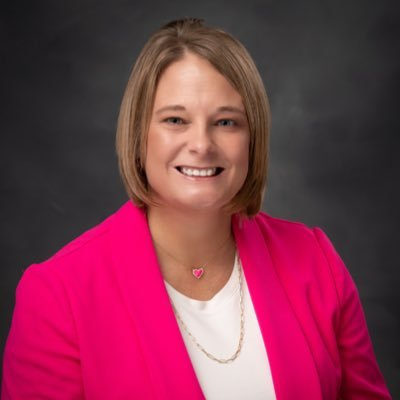
Education Hall Leadership Spotlight
On the last day before spring break in March 2020, Duana Brashear was walking across campus to a meeting when she heard laughter coming from the gym.
She was the principal of Peach Creek Elementary in Splendora ISD, and the sound made her slow down. On her way back, she heard it again. She thought about walking in to say hello, joining the game, and thanking the PE coach for making class something kids looked forward to.
Then she looked at the clock. Buses were about to roll, and she had a million things waiting on her desk, the way every principal does. So she kept walking.
Students went home for spring break expecting to come back in a week. Then COVID-19 closed the buildings, and they never returned that school year.
“I still think about that moment,” Brashear says. “It reminds me to walk into the gym.”
Today she is the superintendent of Rogers Independent School District in Texas, a role she took on in 2024. Anyone who spends time around her work will notice how much of it traces back to that missed moment. She makes time for kids, she stops to thank the people doing the daily work, and she believes the paperwork can wait a little longer.
The Little Girl Who Made Her Siblings Play School
Brashear’s path started early. When other girls were playing house, she was lining up her younger brothers and sister and teaching them. She always knew she would be a teacher.
Her first model was her dad, who retired as an agricultural science teacher. She grew up watching him spend countless hours outside the school day helping students with their projects. Nobody asked him to. He just believed teaching did not end when the bell rang.
“He showed me that teaching extends far beyond the classroom and that relationships are at the heart of the work,” she says.
She spent 11 years in the classroom herself, in a diverse community where she learned that you cannot teach a child you do not know. Later, as a principal at a campus with a high poverty rate, she picked up a lesson that still shapes how she talks to families. Parents send their children to school with the best intentions. Their situations vary a great deal, but every one of them wants their child to do well.
“That perspective continues to shape how I listen, communicate, and partner with families,” she says.
Three Mentors and One Rule
Along the way, three leaders gave her something she still uses.
Dr. Jeff Burke, the retired Splendora ISD superintendent, took a chance on her as a young principal. His lesson was simple. There are two things a leader can control: the quality of the work you design for students, and the relationships you build.
Rick Kershner, an assistant superintendent at Splendora, was the first person to tell her she was meant to lead. He also taught her the part of leadership nobody enjoys. You have to have hard conversations, and people should always leave them with their dignity intact.
Glenn Barnes added the piece she says keeps good intentions from falling short. Relationships and empathy, he showed her, need strong systems behind them. That means clear processes and leadership with a plan.
Those lessons show up in how she runs the district today. She works to know the people she serves, assumes the best of them, talks honestly about problems, and builds systems that help people succeed.
What an F Campus Taught Her About Culture
The test of those lessons came when Brashear moved from assistant principal to principal at Peach Creek Elementary in Splendora ISD, a campus rated F, where the community had very little trust left in the school.
Most leaders in that spot reach for academic interventions. It feels like the responsible move. Brashear went the other way. She believed nothing would stick until people trusted each other again.
So that first year, her team worked on climate and culture. They built relationships with students, made teachers feel valued, and showed families that the school wanted what was best for their kids.
Two years later, Peach Creek Elementary was named a Capturing Kids’ Hearts National Showcase Campus. The academic rating had moved from an F to a C.
When she became superintendent of Rogers ISD, she ran the same play. The district’s elementary campus was rated 65, a D. Year one was about culture, climate, relationships, and making sure teachers felt valued. By the end of year two, the campus had climbed 22 points to an 87, a B. It also earned Capturing Kids’ Hearts Rising Star recognition, along with strong survey results from staff and parents.
“Relationships create the foundation that allows academic improvement to take hold and last,” she says.
Starting With “Why Do You Stay?”
When Brashear arrived in Rogers, she did not show up with a strategic plan. She showed up with a calendar full of conversations.
She offered every employee a 30-minute stay interview. She met one-on-one with parents and community members too. Her questions were simple. What made you choose Rogers ISD? What makes you stay? What makes your work harder than it should be?
The answers kept coming back to the same three words: legacy, tradition, and connection.
A District Learning Team of teachers, district and campus leaders, and community members took those answers and put them into words. The result was a mission, “Cultivating a Legacy of Service & Excellence,” and a vision, “Educate. Empower. Excel.” Over the next two years, the district added core values (Honor, Relationships, Accountability, Effort, Success, and Student-Centered) and the Eagle Leader Profile, a list of five traits the district wants to grow in its people: respectful, resilient, relational, responsible, and reliable.
Brashear is quick to hand over the credit. “In all honesty, it wasn’t my vision, it was theirs,” she says. “My responsibility was to listen, understand it, and help turn it into a shared direction.”
Plenty of districts have a mission statement. Rogers ISD built a balanced scorecard to make sure theirs gets used. It names the priorities, the steps, how progress is measured, and who is accountable. Those priorities are student success; staff well-being, engagement, and growth; community engagement and satisfaction; and strategic allocation of resources. Staff well-being sits on that list on purpose, with a responsibility to follow through.
A Bond the Community Wrote Itself
Rogers voters approved a $31 million bond, with Proposition A receiving 73% support and Proposition B receiving 72% support. Brashear says the vote felt like two things at once: an affirmation and a tremendous responsibility.
The bond did not start in the superintendent’s office. The Board of Trustees commissioned a facilities study before calling the election. A long-range planning committee reviewed the results and worked with the architecture firm Perkins&Will to map out the district’s facility needs over the next 15 years. Then the group learned what the district could afford to borrow. It grew into a Bond Steering Committee of families, staff, and community members, who discussed priorities and shaped the plan that went to the board.
One goal ran through every meeting: there had to be something for everyone. The final plan touches academic spaces, fine arts, athletics, safety, and facility upgrades across the district.
“I believe the support we received reflected the ownership people had in that process,” Brashear says. “The bond became a community-developed plan for our students’ future.”
That ownership did not end on Election Day. A Bond 2025 Oversight Committee of staff, parents, community members, and business owners gets regular project updates, asks questions, and helps decide where contingency funds can do the most good.
The Band Hall and the Floor From the 1940s
Ask Brashear what she is most excited about, and she points to the new addition at Rogers High School. It includes a band hall the district has needed for a long time.
The detail she loves most is who helped design it. The band directors and teachers who will work in the building were part of the planning. Their feedback shaped the space. “Watching those educators move from early conversations about what was possible to teaching in a space they helped envision will be special,” she says.
The project also had to make room for history. Crews demolished a building that dated back to the 1940s. Before it came down, the district saved its original wood flooring and handed it to a local woodworker. The boards are becoming a legacy wall, a tribute to the generations of students and teachers who came through Rogers before today’s kids did.
About 60 Students Who Get a Real Vote
Every school leader says student voice matters. In Rogers, it has a calendar date.
Throughout the year, Brashear meets with a Superintendent Student Advisory of about 60 students in grades 6 through 12. They tell her what school is like from where they sit. The students came up with the Eagle Leader Profile, and the district now uses it in leadership interviews. They have also taken part in hiring, and some will serve on the committee that picks a new reading curriculum for the 2027-28 school year.
When the district hires a principal or director, it also asks students and parents what they want in their next leader, through surveys and town halls. Those answers become a leadership profile that guides the interview committee. The people who will live with the decision help make it.
Teachers get the same treatment. Staff help identify the qualities they need in a leader and take part in the selection process. They also help shape instructional decisions, professional learning, and the district’s Teacher Incentive Allotment work. The district keeps listening through staff surveys, committees, and plain old conversations. Brashear’s definition of empowerment is practical: you have a voice, you see it change a decision, and you get the support to carry that decision out, from planning time and coaching to resources.
“Trust grows when we listen, explain our decisions, and follow through on our commitments,” she says.
Big-School Opportunities, Small-Town Values
Rogers is a rural district, and Brashear wears that proudly. “We are a rural district with small-town values, and our children deserve big-school opportunities.”
In practice, that means a student might compete in an athletic event, perform at a marching contest, and take part in an FFA leadership event in the same weekend. Adults make that possible by solving the unglamorous problems of schedules, transportation, and practice times, so kids do not have to give up one thing they love for another.
Just before this interview, she had been working with the district’s FFA Leadership Development Event teams, including the Agricultural Advocacy team, giving feedback before they competed. She walked away impressed. “They were communicating with a level of confidence and preparation that would impress any audience,” she says.
She wants every person who walks through the doors of Rogers ISD to have an exceptional experience. For students, that means every child, in every program, every day. Fine arts, athletics, academics, FFA, and career and technical education all get the same attention, because every program serves kids whose interests and futures matter. She calls that being relentless about building systems that get those experiences right.
Test scores matter to her, and she is proud of the academic growth Rogers keeps seeing. But she says they are not the measure of success. She wants every graduate, whether headed to college, technical training, the military, or the workforce, to leave knowing they have something worth contributing.
She says she is fortunate to work alongside a board that feels the same way. The trustees hold high standards and want every graduate prepared to contribute in a way that fits their own strengths. Brashear builds that trust the same way she builds it everywhere else: clear communication, follow-through, and a shared focus on students. That common purpose, she says, is what helps them get through the hard decisions.
When a decision gets hard, she comes back to three questions. Is this best for students? Does it reflect our values? Are we creating the opportunities we would want for our own children? Her work has been highlighted in the Texas Association of School Administrators’ Inspiring Leader Spotlight, and she describes serving in public education as a moral obligation to make it better every day.
A Bearkat Family Moment
In 2026, Sam Houston State University named Brashear a Distinguished Educator of the Year. It mattered to her in a way most awards do not. She is a legacy alumna, and being a Bearkat is a family tradition. Her dad, aunts, uncles, brothers, and sisters-in-law all graduated from the university. Two of her mentors, Rick Kershner and Glenn Barnes, won the same award years earlier.
Her daughter, now a Sam Houston State student studying fine arts, sat in the audience. “To share that moment with her, both as my daughter and as a current Bearkat, was something I will always treasure,” Brashear says.
Back to the Gym
That March day in 2020 changed more than how Brashear schedules her afternoons. It changed how she thinks about who makes a school work.
After the buildings closed, she watched her staff refuse to let the distance win. Teachers taught from behind screens and from six feet away in driveways. Every staff member on the campus decorated a vehicle for a parade through the attendance zone, so kids could see familiar faces and know their school was still there. Kindergarten graduates were celebrated from the backs of trucks and through car windows, with heart hands where hugs were not allowed.
“While navigating uncertainty for their own families, they kept finding ways to teach, connect, feed children, support parents, and make students feel loved,” she says.
What she took from it is a long list of names, not a title. Bus drivers, cafeteria workers, grounds crews, paraprofessionals, teachers, technology teams. Whoever holds the leadership role, she says, it is the people doing the daily work who make education possible.
So she walks into the gym now. She notices the joy. She thanks people while she still can.
“We never know when an ordinary moment will become one we wish we could have back,” she says.
The Legacy She Wants
Asked what she hopes to leave at Rogers ISD, Brashear does not name a building or a program. She hopes people know they helped drive the decisions, that their feedback counted, and that they feel ready to own the next chapter.
Her advice to aspiring school leaders fits in one word: listen. Then she adds the harder part. What happens after you listen? Do you change your mind? Can people see proof that their voices mattered?
“A lasting difference grows when leadership is woven throughout a district,” she says, “when people have the trust, confidence, and support to lead from wherever they serve.”
Why TomoClub Shares This Story
At TomoClub, we believe some of the most important lessons in education come from the people who lead schools every day, often in communities whose achievements rarely get the attention they deserve.
Duana Brashear’s journey shows that lasting leadership is built on listening, trust, and follow-through. Her work in Rogers shows what becomes possible when a rural school community shapes its own direction and believes every child, in every program, deserves big-school opportunities.
Through Education Hall, we are proud to share stories like hers and to recognize the educators whose work is making a lasting difference in public education.