LEADERSHIP IN PRACTICE | PRINCIPAL SPOTLIGHT
A Texas principal on how personalized learning helps students grow, why integrating new initiatives in the existing ones prevents teacher burnout, and what a student-led culture of ‘unreasonable hospitality' looks like.
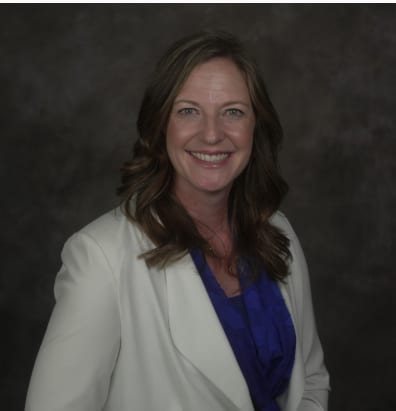
Featuring Lauren Bolack, Principal, Richardson ISD
We think the evidence of a thriving school is the shiny programs. The STEM lab. The 3D printers. The Apple Distinguished School recognition on the wall.
Lauren Bolack believes that's the wrong thing to look at.
The culture she built at Richland Elementary, where she was the fifth principal in five years, shaped how she leads. She brought that same intentionality to MST, elevating an already strong campus to new heights.
Lauren is now in her sixth year as principal of the Math, Science, and Technology magnet school at Richardson ISD. But her story starts in kindergarten. Not as a leader. As a teacher who just needed a job.
She Didn't Plan on Kindergarten. She Didn't Plan on Any of This.
"I started off as a kindergarten teacher. I didn't go into teaching thinking I wanted to be a kindergarten teacher. I just needed a job, and that's what they were offering. And I loved it."
She knew early on she wanted to move into administration. After her first year, she went back for a master's in educational leadership. But she didn't rush into a campus role. She made a deliberate move: she transferred to fourth grade.
She didn’t prefer older students. But she knew she'd eventually lead instruction, and she needed to understand what happened in tested grades. It's a small detail that says a lot. She was already thinking like an administrator while she was still in the classroom.
The experience that really changed her came through a differentiated instruction program. A specialist worked closely with her over time. They unpacked lessons together, tried things in real classrooms, and refined what wasn't working.
"It showed me that students deserve exceptional, personalized learning experiences. When instruction is aligned to their needs and interests, engagement and growth increase significantly."
She carried that into every role after. Instructional coach for a year. An assistant principal across two schools and later transitioned fully into one campus, followed by another Title I campus. Then her first principalship at Richland. Each one added something. Different student populations, different kinds of problems, and a clearer picture of what she actually cared about.
Five Principals in Five Years. She Was the Fifth.
When Lauren arrived at Richland Elementary, she was the fifth principal in five years. Culture was low. Teacher turnover was high.
The work was rebuilding trust, improving culture, and creating academic momentum.
Then a tornado temporarily displaced the school.
Through it all, she secured a STEM for All grant and began working with Discovery Education, something that aligned directly with her belief in differentiated, hands-on learning and creating engaging student experiences.
Why Innovation at This School Doesn't Burn Teachers Out
When Lauren moved to MST, she didn't walk into a broken culture. She walked into a solid one, ready to go further.
That's when the real question became: How do you push innovation without burning people out?
Most school improvement efforts fail here. A leader has a good, research-backed idea. They bring it in. Teachers who are already stretched thin get handed one more thing. The initiative dies quietly. The leader tries something else, and the cycle keeps repeating.
Lauren diagnosed this pattern early and built her whole approach around not doing it.
"As a leader, I work intentionally to integrate new initiatives into existing systems so they feel like a natural part of the work rather than an added burden."
This played out through the engineering design process. Instead of introducing STEM as a separate layer on top of the existing curriculum, it was woven into how teachers already taught. The design process became the connective tissue. Problem-based learning wasn't a special unit. It was how class worked.
Students design solutions to real campus problems. Garden labels, composting systems, and 3D-printed prototypes they test and refine. Kids in early grades use those printers not as a special event but as part of the regular learning process.
It works because the system is set up to support it, and teachers have actual room to try things.
She calls it "grace and space to fail forward.” If you're going to ask teachers to try new approaches, they have to know that making a mistake won't cost them. That's the environment she built. It's also exactly why, when she introduced tools like School AI and Magic School, teachers used them.
The Student Run Coffee Shop
The culture at MST has a name.
She borrowed the concept from the book Unreasonable Hospitality, the idea that the experience you create for people should exceed what they reasonably expect. She made that the standard for everything: how visitors are welcomed, how staff are treated, how students move through the building.
Every classroom has student ambassadors. When a visitor walks in, a student walks up and explains what the class is working on. They've been trusted with that.
Campus tours are student-led. Students guide visitors and talk about their learning from real experience.
And then there's the coffee shop.
Fully student-operated. Students manage the operations, handle marketing, and run the finances. When they turn a profit, they decide where it goes, to causes they actually care about.
Think about what that actually teaches. Not the mechanics of running a coffee shop. Ownership. The feeling that this building, this community, this work is yours. That you're responsible for it and capable of doing something real with it.
That only happens in a school where someone decided students should be trusted with real responsibility. She also built a "Five Houses, One Family" system across the campus so students feel like they belong to something bigger than their classroom. Community doesn't just happen. It gets designed.
Adding AI Without Breaking the System
Lauren's campus uses School AI and Magic School with both students and teachers.
Students use AI for research, for projects, and for writing things like reader's theater scripts. Teachers use it to plan and set student goals. None of it disrupted what had already been built.
When you've spent years teaching students to think, to evaluate their work, and to move through a real design process, AI becomes one more tool inside that process. Not a replacement for thinking or a shortcut around it.
"We focus on teaching students how to synthesize information and use AI responsibly."
At a STEM magnet where real thinking has always been the point, that's not a hard pivot. It's the same habit applied to a new tool.
Her advice on any new technology tracks with everything else: don't add it on top. Integrate it. Give teachers room to experiment without fear of getting it wrong. If the culture is already there and people already feel safe trying things, new tools land differently than they do in schools, where nobody trusts anybody.
When Staying Finally Paid Off
Lauren has been principal at her current campus for six years. Real momentum came in the last four. The Apple Distinguished School recognition. The STEM certification. The student-run coffee shop. It didn’t arrive quickly or come from copying what looked impressive somewhere else.
It was a kindergarten teacher who remained curious. She went back to school before she had to, moved up to the fourth grade because she wanted to learn what she didn’t know yet, and rebuilt trust at a struggling school before being called to enrich and innovate at a thriving one.
What Lauren figured out and what schools keep getting backwards is that you can't build a strong culture on top of weak trust. You can't sustain innovation if it keeps feeling like extra work. And you can't have student leadership if students are never actually given anything real to lead.
The schools that last aren't the ones with the best programs. They're the ones where someone decided to build something real and stayed long enough to see it through.
Why TomoClub Is Sharing This Story
At TomoClub, we believe the future of education isn't built in conference halls. It's built in schools like this one, slowly, under pressure, by leaders who keep showing up.
Lauren Bolack's work at Richardson ISD reflects a kind of leadership that's easy to underestimate. Grounded. Persistent. Student-first. The kind that understands you can't improve a school's results before you've earned the trust of the people inside it, and that once you do, the results tend to follow.
That kind of leadership is exactly what education needs more of right now.