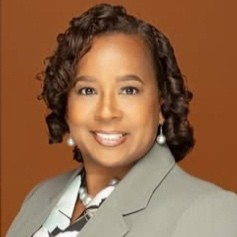
Last year, Dr. Sharon Pepukayi cancelled summer school across Talbot County, almost unilaterally. While her decision was logically driven by the academic numbers and the attendance, which showed that the program wasn't achieving what it meant to, the outcome taught her a lesson in leadership more valuable than any textbook or speech could.
The resulting frustration of the board and the community member contributed to making her the school leader that she is today and continues to become every day. It pivoted her towards inclusivity - to be able to lead people without leaving them out of the decisions that affect them.
And now, this conviction sits in the plainest description of her philosophy, "people over programs."
So, catch this insightful piece about Dr. Sharon Pepukayi, currently serving as the Superintendent of the Talbot County Public Schools. We talked about school leadership philosophy, defining moments, and future portraits. Come along to learn a thing or two from her career in education spanning 30+ years.
People over Programs and Processes
Coming from a family of educators, where both her mother (a retired middle-school teacher) and grandmother taught, Pepukayi soon realised that she wanted to go into education, and she did. She started as a camp counselor in high school and the first few years of college, and also played sports, coaching softball. Visibly, her stint with students has some deep roots.
Going into teaching, she served as an elementary school teacher and then moved into the administrative role of an assistant principal and principal in Delaware and Ohio, later serving as the assistant superintendent at Appoquinimink School District.
What this long journey has taught her, she tells, is to "invest in the people", making sure they are in the 'right' seat and to always keep students at the center of all decisions. The system that she has been building strives to provide space for celebrating others' success and offering a clear path for all (staff and students) to learn and grow, because when they grow, the system grows with them.
Lessons Learnt, and Leading with Voice
What makes Pepukayi a great school leader is that she did not merely acknowledge a mistake in her methods and an inclusivity gap when her unilateral decision to cancel summer school didn't land well with the community, but she made conscious efforts to change that.
This decision now lives in her regular practices as the superintendent. From meeting her staff every Fall and follow-ups with smaller focus groups for Spring, to anonymous surveys in the Spring. She has devised a methodology to be 'more inclusive' in her thinking and to 'communicate early and often.'
The net she has cast is rather wide; she also leads Superintendent advisory, parent advisory, and teacher advisory groups every quarter, making sure that the analysis and suggested changes become teamwork, rather than mandated imposition.
The same instincts also work to address the issues of teacher recruitment and retention, among the hardest challenges faced by school districts. Pepukayi treats them as a listening exercise, rather than a game of numbers.
A staff member travels to recruitment fairs and then circles back to the schools to check on new hires, an exit-interview process captures why people leave, and she personally meets each new teacher at the start of the year.
This process reflects a belief she borrows from Covey, "Seek to understand before being understood." For someone at the top of the school district, this is exactly the mindset that carries the concerns of the community in every step.
How A Philosophy Became a District
When it comes to converting the abstract ideal of 'people-first' leadership into practice, Pepukayi leaves no stone unturned. The Align by 2029 Plan, devised in October 2024 for the entire district, stands as testimony to this.
Rather than drafting it behind closed doors, she began by inviting the county in. Staff, educators, parents, and community leaders were all brought to the table to give their input, and the plan that emerged carries their fingerprints.
The plan set a new vision for Talbot County Public Schools, one where "every student is valued, celebrated, and empowered to achieve their full potential," alongside a mission to partner with families and the community in offering innovative, experiential learning that readies every student for college, career, and life.
Its five core principles, from a Student-Centered Focus to Continuous Improvement, read less like a corporate mandate and more like a translation of what she already believed into something a whole district could act on.
Our conversation with her also revealed an interesting detail. When Pepukayi describes the legacy she hopes to leave, she talks about people who "mattered," who were "celebrated, valued and empowered." The district's official vision reaches for almost the same words for its students.
The words she uses for her people and the words the district uses for its children have become the same words, and for a leader who puts people over programs, that overlap matters.
Beyond the School Gates
For Pepukayi, a school system does not end at its own gates. Community, in her telling, is one of the parts of the job she enjoys most, "being out among people", gathering their feedback, and "sharing the good news of the district."
The numbers give that instinct some shape. Talbot County Public Schools counts 150 actively engaged community partner organisations, several of which open their doors to students for internships and apprenticeships, and each year the district names a community partner of the year.
For leaders working to build a similar community network, she offers practical, simple advice - "stay present in the community, invite partners onto committees and into the work, stay transparent about the district's goals, and keep them updated with real growth metrics."
The same case, turned inward, looks at the needs of students and community support within the school building. Every building has career counselors, school counselors, and social workers who work alongside students, and the district's MTSS (Multi-Tiered Systems of Support) process is built so that no child's needs slip through.
All of this aims to work together to the benefit of the 'whole' child; the canvas revealing the portrait of a graduate as a student leaving TCPS who can think critically, act with civic responsibility, adapt, collaborate, and feel empowered. These are the qualities that every program in the district eventually promises to build, so that every student is ready for college, career, and life.
Facing the Future and AI Integration
Ask Pepukayi what school leaders should be readying themselves for, and her answer lands on two things: the ever-changing world of AI, and preparing students for college, career, and life. Given the times we live in, for her, the two concerns converge in important ways.
Her approach to artificial intelligence follows the same logic as everything else she does. Instead of treating it as a separate initiative to be bolted on, she believes it should enhance the strategic plan and the teaching and learning already underway. And the way to get there, in her view, is with "an inclusive team with many voices" shaping everything from the guidelines, guardrails, and the overall policy, so that no single office decides for everyone else.
Her attitude towards AI integration fits seamlessly into her own philosophy of valuing people and their voices, and the district's own goal of building graduates who can reason and think critically, essential qualities, not only for responsible AI usage, but for a successful career and life.
For Pepukayi, who has had a career spanning four districts, three states, and three different kinds of school systems, urban, rural, and suburban, one single lesson or holy grail is hard to pinpoint. She says each year taught her something, and she won't reduce it to one line.
But looking across everything she has built, the advisory groups, the surveys, the county-wide plan shaped by the people it affects, a throughline becomes obvious to us.
She leads by listening.
For a school leader, that may be the thing that matters most, and rare indeed, to sustain across 30+ years and a dozen roles.
Why TomoClub Shares This Story
At TomoClub, we think a lot about what people-first leadership in education looks like once the speeches end, how leaders influence the culture of schools day to day, and how stakeholder voice turns a policy on paper into something a classroom can feel.
Dr. Pepukayi is one answer, drawn from more than three decades of leading real schools in Talbot County Public Schools and beyond. The Education Hall series exists to gather more of them, the superintendents and principals genuinely doing this work, so other leaders have something honest to learn from.
Read the full Education Hall series, and if you're building a school where students learn to think, adapt, and lead, come talk to us.