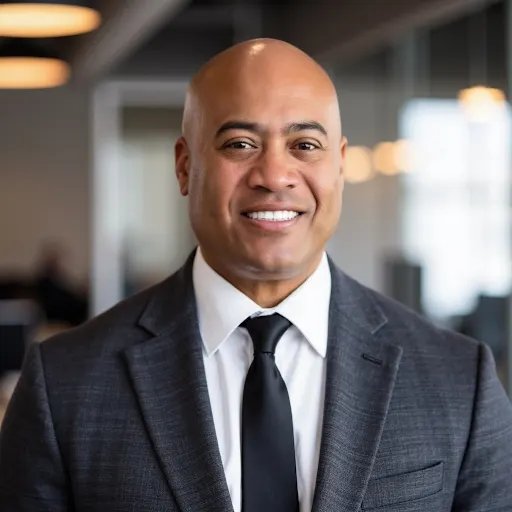
Education Hall Leadership Spotlight | Terrence Davis, Superintendent, Banning Unified School District, California
Long before he ever sat in a superintendent’s chair, Terrence Davis spent his days at a children’s home in Orange County.
It was Orangewood Children’s Home, a place where kids were being cared for away from their own homes. Davis was there as part of his work in Social Services, and he noticed something that would quietly redirect his whole career. There was a school right on the grounds. Those children were carrying circumstances far bigger than any classroom, yet school was still the place where an adult could sit across from them, help them learn, and offer a little steadiness.
That sight stayed with him. It led him to substitute teaching, then to a K-12 classroom of his own, and eventually to the corner office of a school district. Today, as Superintendent of Banning Unified School District, he still leads with the lesson Orangewood taught him: you cannot support a child’s learning without understanding what that child is living through.
From Classroom Teacher to Superintendent
Davis loved teaching. But he also felt a pull toward Human Resources, a side of schools most families never see and every school depends on.
Before he had the chance to move into HR in Temecula, he served as a Special Education administrator in Alvord Unified and Temecula Valley Unified. Those years were an education of their own. Special education and human resources share one thing: hard conversations. There are legal questions, competing needs, and decisions that change real lives.
“Listening carefully does not remove the need to make a decision,” Davis says, “but it helps you make a better-informed one and understand how it will impact others.”
That habit, caring for people while staying clear about roles and expectations, became the foundation of how he leads. It is also what prepared him for the superintendency.
Walking into Banning in the Middle of a Pandemic
Davis arrived in Banning in 2020, right when the world was upside down. Schools were closed or half open, families were stretched thin, and inside the district there was real tension between leadership and the employee associations.
He did not start with a big announcement or a new slogan. He started with relationships. His first priority was building trust with the leaders representing both teachers and classified employees, the bus drivers, instructional aides, office staff, and others who keep a school day running. Those relationships, he says, were essential to changing the district’s culture and climate.
“We had to develop a way of working together that people could believe in,” he explains. That meant staying at the table through difficult issues, even when it was uncomfortable.
The result is something he is plainly proud of. “Today, I see a much stronger sense that we are one District,” Davis says. People can still see things differently and work side by side for students. A shared commitment, he adds, gives the district a stronger footing for every challenge that comes next.
The Story Behind Courageous Fire
If you spend any time around Davis, you will hear the phrase Courageous Fire. It is the name of his book, and it is a way of thinking about leadership that took years to form.
The idea began taking shape after he became a superintendent in 2016. He was leading breakout sessions at conferences, and a colleague named Andy, whose story appears in the book, helped him sharpen what he was trying to say. They wanted to encourage leaders while staying honest about what the job demands.
For Davis, courage is not about being loud. “Courage includes listening, caring about people, and being willing to make difficult decisions,” he says. It also means holding boundaries and doing what you believe is right, even when the conversation is uncomfortable.
His time in special education, human resources, and the superintendency each added a piece. Courageous Fire grew out of all three, and it eventually became both a book and a bigger platform for sharing what he was learning. His hope is simple: that people see they can lead with care and still have the courage to act.
A Culture of Belonging
In Banning Unified, belonging is not a poster on a wall. It starts with a question every leader can ask: do I really know the person in front of me?
“We need to know more than someone’s title or role,” Davis says. “We need to listen to their experience and consider what would help them participate, contribute, and move forward.”
The work with employee association leaders is one example of that belief in action. As those relationships have improved, the two sides are more able to approach problems as colleagues who share a responsibility. That is the culture Davis wants every employee, and every family, to feel across the district.
Belonging, he points out, shows up in small moments: how the district responds to a concern, how people treat one another, and whether someone walks away feeling their voice mattered. It is something you have to keep practicing every single day.
Fixing Systems, Not Blaming People
One of the biggest shifts underway in Banning is how the district uses its data. Looking at numbers is one thing. Using them on purpose, to get better, is another.
Davis is having his leadership team trained in improvement science, a way of working that gives everyone a shared method for understanding a problem, testing a small change, and learning from what happens.
It changes the tone of the conversation. When something is not working, the team looks at the system and the conditions that produced the result. They ask what small change they could try and what evidence would show whether it helped.
“People still have responsibilities,” Davis says, “but we can work on a problem without immediately making the person the problem.”
He is careful to say this work is still underway. But he sees it as the base for lasting progress, and for building a district that gets better at learning from what it tries.
Giving Students a Seat at the Table
For a long time, Davis has wanted to start a student leadership group in Banning. This year, with added support, it is finally happening.
Students are talking openly about the challenges they face at school and connecting those concerns to the district’s goals. They are brainstorming ideas to address them and preparing a presentation of their work.
Davis believes this matters because kids see things adults simply cannot. “They experience our schools every day,” he says, “and their understanding should help shape our decision making.” He also wants them to practice something many adults never learn: how to move from spotting a problem to thinking through a real solution.
It is early, and he is honest about that. But watching students dive into the process has been, in his words, refreshingly rewarding.
Becoming an Improvement Oriented District
Banning Unified has made steady progress over time, and Davis gives the credit to the people closest to students: teachers, staff, and the students themselves. Families and the wider community are learning alongside them, and their involvement matters.
The next challenge is making that progress more consistent and understanding what is driving it. That is the thinking behind the district’s goal of becoming an Improvement Oriented District: look closely at what students need, learn from the approaches the schools use, and adjust when something is not working.
Davis says he is encouraged by the direction of the district and by how willing people are to keep growing. The task ahead is to keep tying that effort to clear evidence of what is improving for students.
Preparing Students for Life After Graduation
Ask Davis what a high school diploma should mean, and he points past the graduation stage.
He wants students to see real possibilities for their lives and understand how today’s learning connects to them. Partnerships like Tomorrow’s Talent help by linking students to the world they are about to enter. Since that world keeps changing, he also wants young people thinking creatively about their futures.
The district is building a learner profile that spells out what students need to succeed beyond school. The work is still in progress, and Davis expects the district to dig deeper over the next year. Communication, leadership, and connection to community are all part of the conversation.
The question guiding it all is a simple one: “What should a student be able to carry from their education into the rest of their life?”
Sharing the Journey Beyond the District
Davis has never kept his learning to himself. Through ACSA, the Association of California School Administrators, he served as a Region President and as a State Director on its Board of Directors. Those roles introduced him to other leaders and communities and gave him more to draw from in his own work.
Writing Courageous Fire, speaking at events, and hosting the FIREtalk podcast all grew out of those experiences. When he speaks, he shares stories and ties them to something listeners can take home and use. The podcast gives him room for honest conversations about real-life experiences and what people learn from them.
“It continues to challenge and inspire me as well,” he says.
AI, Apollo, and the Future of K-12
Like many leaders, Davis has felt artificial intelligence change how he works. A couple of years ago, he began developing Apollo, an AI thought partner. He describes it as a mirror. It helps him look at his own thinking, notice what he may have missed, and sharpen what he wants to say. The judgment, he is quick to add, is still his. He has to question every response.
Inside Banning Unified, the district uses AI within closed systems and is working out how to support safe use with students. AI can help people work more efficiently, he says, but human connection and critical thinking must stay at the center.
His advice to fellow superintendents is practical. Be clear about the purpose. Set boundaries for how it gets used. And help everyone understand that an AI response always needs a human review. Above all, students need room to build their own thinking while they learn to use these tools.
The Legacy He Wants to Leave
By the time he retires, Davis will have given more than 30 years to public education. When he thinks about what he hopes to leave behind, he does not talk about programs or titles. He talks about capacity.
“I want to leave something people can sustain and continue improving,” he says. At this stage of his career, he sees improvement science as the heart of that goal. If people learn to look at challenges from different angles, test small changes, and share a common language for learning, that skill stays long after any one leader is gone.
His advice to current and aspiring superintendents starts with something humble: understand your local context. Take the time to learn what students, employees, and the community need, and let that shape how you lead. And as you do the work, ask what will help the community keep succeeding when you are no longer there.
For Davis, the answer comes back to people. A lasting contribution, he says, is helping others build the relationships and habits that let them keep making things better together.
It is a long way from a school on the grounds of a children’s home. But the thread is the same. Listen first. Care deeply. Then have the courage to act.
Why TomoClub Shares This Story
At TomoClub, we believe some of the most important lessons in education come from the people who lead schools every day, often in communities whose achievements rarely get the attention they deserve.
Terrence Davis’s journey shows that strong leadership is built on trust, continuous learning, openness to new ideas, and a commitment to opening doors for students. His work in Banning shows what becomes possible when a school community shares a clear purpose and believes every child deserves the chance to explore a meaningful future.
Through Education Hall, we are proud to share stories like his and to recognize the educators whose work is making a lasting difference in public education.