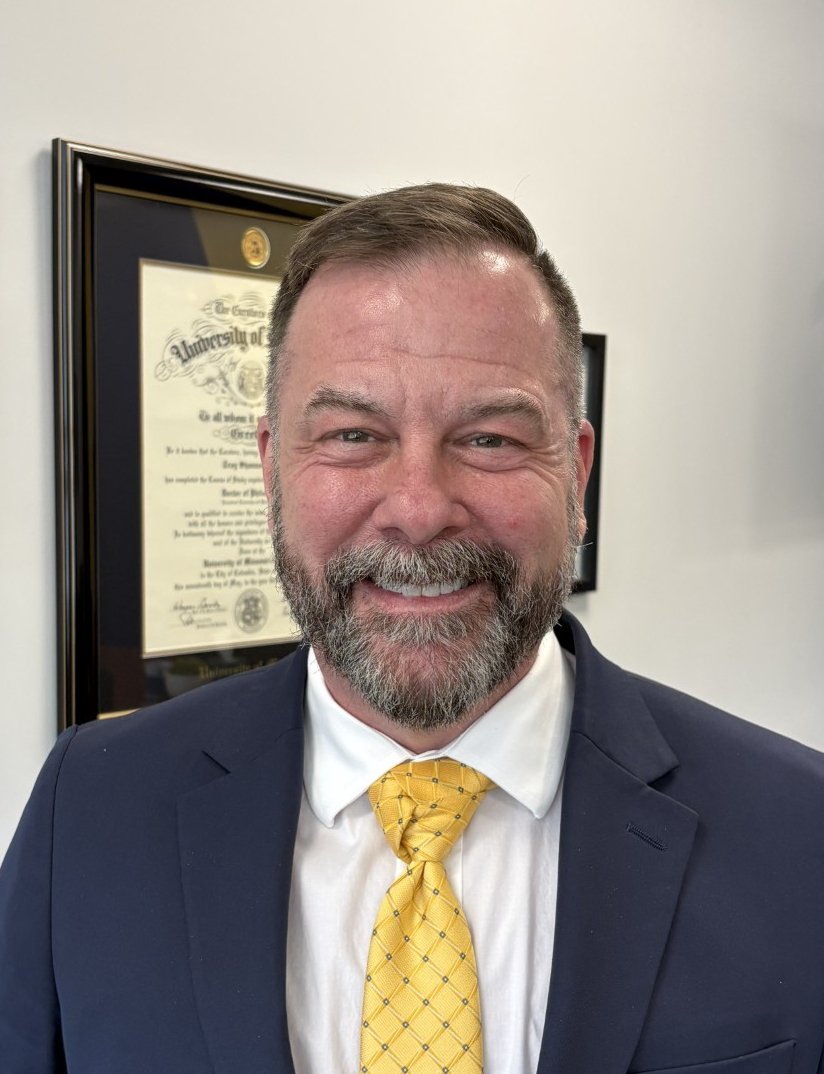
Education Hall Leadership Spotlight | Dr. Troy S. Hogg, Superintendent, Center 58 School District, Missouri
In the summer of 1999, Troy Hogg found himself following a group of elementary school children down a narrow dirt road in rural Japan.
He didn't speak Japanese. The children were leading him through the countryside, and the teacher in him was worried about keeping everyone safe. Armed with a pocket dictionary, he searched for the words "Be careful!" as the children ran ahead. Eventually, they reached a grove of tall trees, where an old Japanese temple stood among moss and stone.
The place was peaceful, and the experience stayed with him. Standing there, Hogg realized how small his own world had been and how much there was still to discover. He learned to trust curiosity, welcome unfamiliar experiences, and recognize what people can accomplish when they are willing to try.
More than two decades later, that lesson still shapes his work. Today, as Superintendent of Center 58 School District in south Kansas City, Missouri, Dr. Hogg is helping a community reconnect with its pride while building a stronger future for students.
From a Love of Learning to a Life in Education
Long before becoming a superintendent, Hogg was a child who simply loved going to school. He enjoyed learning new things and wanted other children to feel that same excitement.
"I hoped to inspire kids to be curious and ask questions about the world around them," he recalls.
That love of learning carried him through more than three decades in education, from the classroom to district leadership. Along the way, he discovered that the people leading him could teach him just as much as his own experiences.
Some inspired him through their communication, humor, intelligence, and genuine care for others. Others showed him what leadership should not look like. Both helped shape his approach.
He wanted to become the kind of leader who encouraged people to try new things, challenged them to grow, and never lost sight of the students affected by every decision.
Finding a Community Worth Investing In
When Dr. Hogg arrived at Center School District as interim superintendent in April 2025, one thing stood out immediately: the community's pride in its schools.
Center is a small urban district in south Kansas City, surrounded by much larger districts. But its history runs deep, and Hogg found that many people had a personal connection to the schools.
"People are proud of the district and proud to be graduates from it," he says.
He also heard something else in those early conversations. Families and staff often spoke about Center's earlier successes and wanted to see the district return to those days. There was pride in the past, but also hope for what could come next.
Hogg saw an opportunity to turn that hope into action.
Within six months, the district had begun developing a new strategic plan, preparing two ballot measures, and improving how it communicated with families and the community. The work was gaining momentum, and Hogg wanted to see it through.
In January 2026, he was appointed permanent superintendent. He knew the district still had challenges to address, but he also knew he wanted to be part of what came next.
The Story Behind "Center Proud"
"Dream Big, Excel Always, and Be Center Proud" is more than a message for Dr. Hogg. It reflects what he heard from the community when he first arrived.
People wanted to feel proud of Center again. They remembered what the district had accomplished and believed it could achieve more.
But Hogg knew hope alone would not be enough.
"A dream in and of itself will not lead to success," he explains. Reaching that dream requires hard work, stronger teaching, and a commitment to excellence from students, staff, and district leaders.
He is open about the need to improve academic achievement. One step has been identifying a districtwide instructional framework that outlines essential teaching practices across grade levels and subjects.
A former student reinforced that priority during the district's 2025 back-to-school meetings. The student, who would graduate in 2026, challenged teachers and staff to raise academic expectations and push students harder.
For Hogg, hearing that message from a student was a reminder that young people recognize their own potential. They want adults to believe in what they can accomplish and challenge them to reach it.
Building the Future Through FLIGHT 58
One of the biggest efforts underway at Center is FLIGHT 58, the district's strategic plan for 2026–2030.
The plan was developed through six teams of stakeholders, bringing together parents, teachers, staff, board members, and administrators. They studied district data, discussed priorities, and helped shape the goals that will guide Center's future.
Hogg appreciates that the plan reaches across the entire district rather than focusing on only a few areas.
"I particularly appreciate that no one area was left untouched," he says.
The work includes goals for departments throughout the organization, with a stronger focus on excellence and improving outcomes for students.
For Hogg, the plan is also about shared ownership. The people who teach, work, and raise families in Center helped shape its direction, and he hopes that involvement will continue as the district puts the plan into practice.
His goal is to see educators better equipped to serve students and students achieving more across their school experience.
Creating Schools Where People Want to Belong
For Dr. Hogg, improving student achievement begins with something that is easy to overlook: whether students and staff feel they belong.
A sense of belonging is one of the priorities within FLIGHT 58. He believes that when people feel connected to their schools, they are more likely to show up, participate, and invest in their work.
That connection matters for both students and educators.
Hogg sees a relationship between belonging, attendance, and achievement. When students want to be at school, they have more opportunities to learn. As they experience success, their confidence and sense of purpose can grow.
The same idea applies to teachers and staff. People who feel valued and supported are better positioned to contribute to a positive school culture.
For Hogg, belonging is not separate from academic improvement. It helps create the conditions that make improvement possible.
Rebuilding Trust One Conversation at a Time
During his first visits to Center's schools, Dr. Hogg noticed a disconnect between the central office and school buildings.
Trust had been affected by poor communication. Staff did not always feel connected to district leadership, and Hogg knew that needed to change.
One of the district's first steps was hiring a full-time communications officer to help families and employees better understand what was happening in their schools.
He also wanted to create more opportunities for people to share their experiences. The district introduced annual surveys for families and used a similar process to gather feedback from teachers and staff.
But Hogg believes listening is only useful when people can see what happens afterward.
"It's important that we share those results back out for the stakeholders to see," he says. That means showing people what the district heard and what actions it plans to take.
The district's Listening and Learning Tours offered another opportunity to improve communication. This year, executive leadership team members held small-group conversations with approximately three to ten staff members at each building.
The format gave more people room to speak. Several staff members told leaders they appreciated the conversations and felt more heard than before.
Hogg planned to follow up with building-level summaries and feedback notes, making sure the conversations did not end when the meetings were over.
The work is still developing, but the goal is clear: rebuild trust by making communication more consistent, open, and meaningful.
What Teaching in Japan Taught Him About Leadership
Dr. Hogg's experience in Japan shaped the way he thinks about students, collaboration, and understanding others.
Through the JET Programme, he spent time living and teaching in a culture that approached individuality and group responsibility differently from what he had experienced in the United States.
He noticed how strongly Japanese students were encouraged to work together, while American students were often encouraged to develop their independence.
Both approaches, he believes, offer something valuable.
"We need to help our students stand out and lead our future, but we also need to collaborate, work together, and see other perspectives," he explains.
Living abroad also changed how he understood being different.
In a small Japanese town of approximately 10,000 people, Hogg was the only foreigner. He experienced being treated differently because of his appearance and the language he spoke.
It gave him a perspective he had not encountered before.
He is careful to acknowledge that his experience does not mean he fully understands what others have lived through. But it helped him become more aware of the challenges people can face when they look or sound different from those around them.
Those lessons have stayed with him. They influence how he thinks about inclusion, belonging, and the importance of treating people with care.
Making Difficult Decisions with Compassion
After more than three decades in education, Hogg has learned that some of the hardest leadership decisions involve people.
One of the most difficult, he says, is reaching the point where an employee cannot continue in their position.
Educators spend their careers helping others grow. When a teacher or staff member is struggling, leaders naturally want to coach, support, and help that person improve.
But sometimes those efforts do not lead to the necessary change.
Hogg knows that decisions about an employee's future can be painful. They affect real people and their families, even when leaders believe the decision is necessary.
As superintendent, he helps other district and building leaders navigate those moments.
He reminds them that students' best interests must remain at the center of every decision. At the same time, leaders have a responsibility to recognize the human side of their work.
For Hogg, compassion and accountability are not competing ideas. Strong leadership requires both.
Expanding Opportunities Beyond the Classroom
Dr. Hogg wants Center students to experience learning that connects to the world beyond school. But he also understands the limitations facing a smaller district.
That is why he sees collaboration as an important part of the solution.
Center has opportunities to strengthen its partnerships with neighboring Hickman Mills and Grandview school districts. By working together, Hogg believes the districts can continue providing meaningful experiences while remaining responsible with limited resources.
"Together we can accomplish so much more," he says.
He also wants real-world learning to connect more directly with academic instruction.
A student participating in a meaningful project outside the classroom, for example, should also have opportunities to strengthen skills connected to English or another required subject.
That kind of integration would allow students to benefit from multiple learning experiences without having to choose one at the expense of another.
Hogg acknowledges that Center still has work to do to build stronger connections between real-world learning and the Missouri Learning Standards.
But he believes the direction is important. Students should be able to understand not only what they are learning, but why it matters.
Bringing Families Into the District's Future
For Dr. Hogg, stronger schools require stronger connections with the people they serve.
Center has been expanding opportunities for families to participate in conversations about the district's direction, including annual surveys and involvement in the FLIGHT 58 strategic planning process.
The district has also introduced community activities that bring families together outside the classroom.
Hive Nights at sporting events create opportunities for connection, while the Back to School Bash helps families access community resources.
These activities are part of a larger effort to make the district more visible, accessible, and connected to its community.
Hogg says the response to improved communication has been encouraging.
But he is careful not to describe the work as finished. The district is still early in the process, and he believes there is more to do to strengthen outreach and build lasting relationships.
The goal is not simply to invite families to school events. It is to make sure they feel they have a meaningful place in the district's future.
The Legacy He Hopes to Leave
When Dr. Hogg thinks about Center School District five or ten years from now, he hopes people will recognize how far it has come.
He wants the community to see a district that has improved, found a stronger direction, and given families new reasons to believe in their schools.
Most importantly, he wants people to feel proud of Center again.
"I hope that people will say that we have come a long way, we are back on track, and we have a district that we can still be proud of!"
He knows that kind of change will take time. Improving instruction, rebuilding trust, supporting educators, and creating stronger opportunities for students are not things that happen with one decision.
They require consistency and people willing to work together.
When asked what advice he would give the next generation of school leaders, Hogg returns to the belief that has guided him throughout his career.
"Stay focused on doing good things for other people," he says.
Schools exist to serve students, but also the teachers, staff, and families who support them. Keeping those people at the center of decision-making, he believes, gives leaders a dependable sense of direction.
For Hogg, that purpose connects everything, from his early years in the classroom to the lessons he learned in Japan and the work he is leading today.
He is still the educator who believes curiosity can change lives. Only now, he is helping an entire district discover what might be possible when people believe in themselves and one another.
And at Center, that journey is just beginning.
Why TomoClub Shares This Story
At TomoClub, we believe some of the most important lessons in education come from the people who lead schools every day, often in communities whose achievements rarely get the attention they deserve.
Dr. Troy S. Hogg's journey shows that meaningful leadership is built on trust, curiosity, compassion, and the willingness to set higher expectations. His work at Center reflects what can happen when a district listens to its community, supports its educators, and gives students reasons to believe in their future.
Through Education Hall, we are proud to share stories like his and recognize the educators whose work is making a lasting difference in public education.