A Minnesota superintendent on what 36 years, from a Texas math classroom to a rural district office, taught him about never writing off a kid, why the fastest way to turn around a struggling district is to slow down and listen first, and what it means to lead a school that's the beating heart of three small towns.
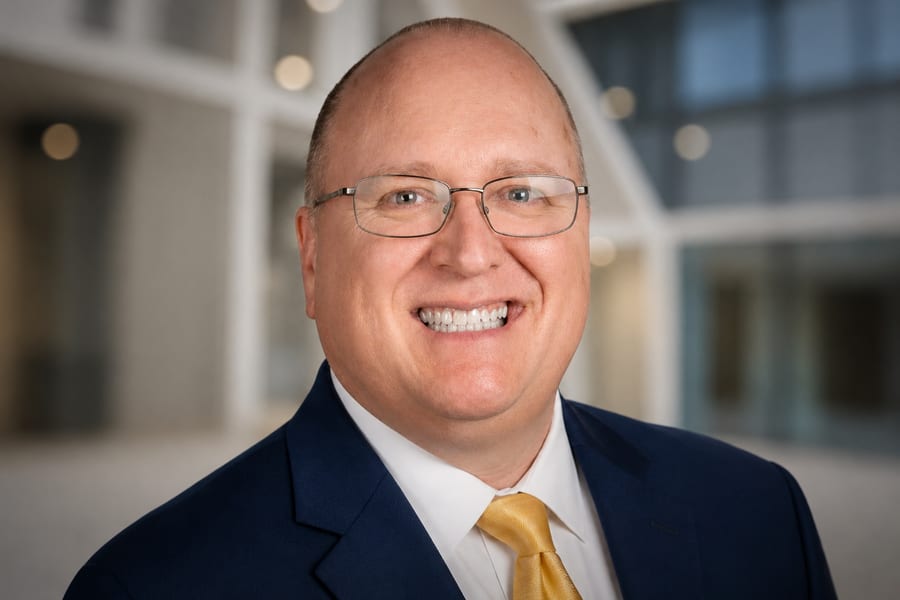
FEATURING Brad Johnson, Interim Superintendent, Wadena-Deer Creek School District #2155
Brad Johnson is in his 36th year in education. He's been a math teacher, a coach, a middle school and elementary principal, and, for the past six years, a superintendent.
He led through a $14 million referendum and a pandemic in McGregor, spent two years turning things around at Renville County West, and this July he starts again as interim superintendent at Wadena-Deer Creek.
This isn't a highlight reel of his career. It's a working guide to leading a small district when almost everything is stacked against you.
The Long Road to the District Office
Brad knew early. As a high school junior, he already wanted to be an educator, torn only between math and music. He picked math, partly for love of the subject and partly for a practical reason. A math degree would keep him marketable if teaching didn't pan out. It did.
The first 13 years were all in the classroom. He taught everything from 7th-grade basic math to 12th-grade calculus. His very first job was in the Rio Grande Valley in Harlingen, Texas, at a school with 900 eighth-graders, where he ran six sections of the same pre-algebra class. From there, he went to Lakota, North Dakota, a small rural town where he was the entire math department and did a lot of coaching. That's where the seed of administration first got planted, though it would sit for years.
He moved to southern Minnesota next, teaching at Grand Meadow, then spent six years at Waterville-Elysian-Morristown. Being close to Minnesota State University, Mankato, allowed him to chase his administrative degree. He earned a Master of Science in Educational Leadership and a six-year specialist certificate and got his principal's license.
Then came 16 years in Benson. Seven as middle school principal, testing coordinator, and coach. Nine more as an elementary principal after a realignment. When the district's superintendent resigned, a big chunk of the staff came to him and pushed him to put his name in. He didn't have the credentials yet. Their support sent him back to school at St. Cloud State to finish the last two courses for his superintendent's license.
He stepped into the top job in 2020, taking on both superintendent and elementary principal in McGregor during a global pandemic and a tense political climate. He started July 1st, and by late August, the district had run and passed a $14 million building referendum.
"They don't teach you the logistics of a multi-million-dollar construction project in graduate school."
He learned it in real time while juggling shifting isolation rules and a community split down the middle on masking.
Two years at Renville County West followed. Now he's off to Wadena-Deer Creek. Almost forty years in, and he still talks about the next chapter like there's more to see.
The Two Questions Behind Every Decision He Makes
When required to make tough calls, Brad points back to a professor at Minnesota State, a seasoned former administrator who gave him a two-question filter he still uses.
Is it legal? Is it good for students?
"These two simple questions serve as my compass."
If something doesn't line up with state and federal guidelines, or it isn't really serving kids, he takes it back to the board and looks for another way.
The questions stay the same as you climb, but the view changes. As a principal, his focus was the students and teachers right in front of him in one building. As a superintendent, he still carries that, but he has to marry it to the macro stuff. Fiscal responsibility, infrastructure, and long-term financial health. You can't run a strong program if the district is broke, and you can't defend a healthy budget that came at the expense of student resources. Every decision lives in that tension.
Stewardship is a big piece of it. This is taxpayer money, and he treats it that way. He flatly rejects the idea that it's easier to ask forgiveness than permission, because in district leadership, cutting corners just means paying to fix mistakes later. And it's incredibly difficult to ask a community for a referendum if they think you wasted what they already gave you.
That same standard shapes how he hires. In a teacher shortage, it's tempting to drop a warm body into an empty room. He won't.
"A poor fit damages the students, the program, and the culture of the building."
The flip side is the heaviest part of the job. Realizing a recent hire isn't working, and having to let them go. He'll admit he has thin skin about it because he knows the decision hits someone's livelihood and family. It weighs on him. He does it anyway when the kids need him to.
What He Did First at a District That Needed Healing
When Brad arrived at Renville County West, he didn't inherit a curriculum problem or a budget problem. He inherited a district that needed healing.
The year before, a brutal labor negotiation had left real bad blood between staff and administration. Teachers felt undervalued and poorly treated, and in a small, tight-knit place, those feelings spilled straight into the community. The district is actually three distinct towns, five to seven miles apart, where everybody's either related or knows everyone. His first job was mending fences.
So he built a listening plan and worked on it.
He sat down one-on-one with all seven school board members, 30 to 60 minutes each. They'd just spent weeks interviewing him, so he flipped it and interviewed them.
Who are you? Why do you serve? What's your vision for this district?
At the end of every one of those meetings, he asked for two names. Two people in the community he needed to meet, and he didn't care whether they loved the school or hated it.
"I wanted to hear it all."
Then he chased down every referral. Not in the sterile superintendent's office. He met them where they were comfortable. He'd walk into local cafes and small-town restaurants, buy them a Coke, and sit for 15 to 30 minutes, asking only a few questions and listening carefully.
He also became part of the fabric. Each of the three towns has its own Lions Club, and while it's rare for a superintendent to join even one, he joined all three. He showed up to games and concerts he wasn't required to supervise, and even to summer youth baseball and softball that had nothing to do with the school.
"Showing up when you don't have to makes all the difference to families."
And he sat back. One of the best pieces of advice he ever got was to spend your first year in a new role observing, not overhauling. Every community has traditions that carry deep emotional weight, and an outsider who barges in changing things will alienate the exact people he needs. His first year was about learning what was sacred and worth protecting, while quietly spotting the systems that genuinely needed to evolve.
It worked. When he announced he was moving on, he was floored by how many staff and community members told him how much they didn't want him to go.
"We mended those fences by simply showing up and listening."
How a 20-Year Culture of "Good Enough" Started to Crack
Renville County West carried a "comprehensive" designation from the state, meaning student growth wasn't hitting baseline. The gaps were heavy in reading. And academically, the district had sat near the bottom of its local nine-district cooperative for close to 20 years.
That's the dangerous part. Give it two decades, and people will just start to accept it. His stance was blunt.
"We cannot accept low achievement. If we do, we aren't doing justice to our kids."
The community is economically diverse, with a high share of families on free and reduced lunch and a 30% Hispanic population that first rooted there as a migrant community. Some staff pushed back at first, leaning on "we've always done it this way." His job was to shift that mindset and prove that demographics are not a destiny.
He's clear about his own lane. His background is administration, not curriculum, so he leaned on an elementary principal he describes as a real go-getter and on state and cooperative partners. Together they went deep on the Minnesota READ Act, sending staff across the state for rigorous LETRS training, the language and reading science work that builds real proficiency. They brought in UFLI, the University of Florida Literacy Initiative, as a foundational reading curriculum.
But a curriculum is only as good as the follow-through. Brad has no patience for the "flavor of the month" approach, dropping new material on desks with one day of training and walking away. His team keeps revisiting it in staff meetings, answering questions, adding resources, and keeping it alive.
He's also honest about what he thinks of state tests.
"It is a one-day snapshot of a child's life."
He'll tell you that you can practically watch the moment a teenager gives up and starts filling in random bubbles. The data still holds useful diagnostic value, but the real work happens when you balance that snapshot against what you see in classrooms every day. So the district leans on FastBridge benchmark testing three times a year for real-time reads on student growth, and it folds its Title I specialists and Minnesota Reading Corps members directly into classroom data teams instead of letting them work in silos.
There's one more piece a lot of districts skip: the curriculum cycle. Without a documented timeline for review and replacement, you end up with 12 or 13-year-old textbooks that can't keep pace with the standards.
A real cycle does two things at once. It protects academic integrity by making sure materials meet current standards, and it lets him forecast the cost because high-quality curriculum is expensive and a budget can't absorb those hits at random.
The result, after all of it: FastBridge data showed a 7% jump in students reading at or above grade level from the start of the year to the end. In a district clawing out of a 20-year culture of low performance, he calls that number monumental. Proof that the systems work and the kids were capable all along.
Why He Sent Kids Home Early Twice a Month
Good outcomes need teachers digging into data together in real professional learning communities. But you can't just hand PLCs to teachers and say "get it done" with no time to do it. Before Brad arrived, RCW ran PLCs first thing in the morning. Staff met at 7:30, but class started at 8:10. Thirty-odd minutes, and everyone's mind was already on the students walking through the door.
It didn't work. So he sold the board and community on a different plan: a 1:30 early release twice a month. Some people wondered why not just do late starts. But moving PLCs to the afternoon gave teachers a solid, uninterrupted two-hour block, minds clear of the day still to come.
He says the difference has been night and day. Walking the buildings during those blocks, he's watched collaboration and data-sharing grow. It cost him a fight over the calendar, and it was worth it. Same with the READ Act, where he carved four full professional development days out of the year purely for teacher training.
It's a tough sell to a board and to parents, and in his view, an absolute necessity. He's firm that this training belongs inside the contractual workday. Asking teachers to do demanding PD on their own weekends without real compensation is, to him, simply unfair.
How You Keep Teachers a Big District Could Poach
Rural districts can't match metro pay scales. So Brad competes on the things money can't buy.
Start with visibility. He calls leadership a presence sport and tells staff at the start of every year exactly who he is and how he works. He wants to be in classrooms and hallways, seeing what's real. It pays off in two directions. When a nasty rumor surfaces online about a teacher, he can step in personally because he was in that room twice that week and can say so. And it lets him catch the good things no data report ever captures.
Then there's morale. Educators take a beating from the public, politicians, and the media, so he builds his staff back up on purpose. There's a "Difference Maker of the Month" program built around peer recognition that's fully inclusive. Teachers, custodians, bus drivers, and cooks are all in the same pool. Winners get surprised in front of students, showcased on social media, and handed a custom "Difference Maker" t-shirt that he funded through Lions Club donations. He keeps the shirts scarce on purpose, as a high-honor award, so they actually mean something.
Retention, to him, starts before day one. Because of shortages, he sometimes hires for potential over polish and then makes mentorship non-negotiable. For isolated single-building principals, he reaches out to neighboring districts to set up external mentors and leans on state professional associations and the regional nine-district consortium to fight rural isolation.
And he insists mentorship runs both ways. He learned that himself in his second year of teaching in Grand Meadow, when his mentor walked in and said something that stuck: "As your mentor, I'm actually learning just as much from you as you are from me." A massive eye-opener for a young teacher. He carries it now, wanting new staff to know their fresh ideas matter from day one.
He also has their backs, loudly. Every community has a vocal minority that bashes school staff, and he sees his job as standing as a wall between that noise and his people. His teachers and principals know he'll defend them and, if it comes to it, "go to war" for them.
The connection piece is deliberate, too. He pushes his team toward real family contact, phone calls, and face-to-face interaction over sterile email and tracks parent-contact numbers monthly. He holds himself to the same rule with staff, grabbing "40-second conversations" in the hallway just to show genuine interest in their lives outside school.
What's Really Draining Small Schools Dry
Even a well-run district is fighting on several fronts at once, and Brad is quick to note it isn't just a Minnesota problem. It's a national one.
Staffing is a drought. Special education, math, and the sciences have become nearly impossible to fill out here, and the long-term substitute pool has mostly vanished. Early Childhood Special Ed is the worst of it. The licensure rules are strict, and he'll stare at a vacancy with no clean legal way to fill it. Temporary variances carry real risk because families across Minnesota are filing legal claims that their kids' specialized needs aren't being met by variance holders, which can force districts to pay for expensive compensatory education later.
Enrollment is sliding as families have fewer children, and in a small district, every student matters to the bottom line. The Post-Secondary Enrollment Options program makes it worse. If 12 to 15 students enroll full-time in an online PSEO course, the district can lose up to $150,000 instantly, while its overhead stays identical. He can't cut staff because he still owes a full curriculum to everyone who stayed. He calls the quiet version of this "academic arbitrage," where students drop a rigorous concurrent-enrollment class the district offers in the building for an easier online version through an outside college. The district loses the money, and the student gets a weaker education.
Then healthcare. Public education used to trade lower salaries for a secure retirement and excellent, affordable coverage. That deal is breaking. Premiums can jump 25% or more in a single year, with hundreds of thousands in overhead out of nowhere. Careful planning has kept it manageable in his building, but he's heard worse nearby.
"Full-time paraprofessionals actually have to write a check to their school district at the end of the month. Their entire monthly paycheck is swallowed by their healthcare premium, leaving them owing the district the remaining balance just to maintain coverage for their families."
A person works full-time and ends up owing money to keep their kids insured. That's where the crisis actually lands.
It ties to his frustration with unfunded mandates. The legislature passes good ideas without the money to run them, so districts cannibalize their general fund to comply. The one-to-one technology model is the clearest example. Since COVID, every kid has a device, and refreshing all of them is a big recurring cost nobody funded.
He's wary of where vouchers lead, too, especially out here. In a metro area with private schools nearby, a voucher can make sense. In rural Minnesota, there's no network of private schools waiting. And private schools aren't bound by the same federal rules, so they aren't required to serve high-needs special education students the way public districts are. When vouchers siphon public dollars away, public schools get left underfunded while still educating every single child who walks in.
What Partnerships Do That Budgets Can't
Brad doesn't leave people in the gloom because he's spent a career finding workarounds. The answer, over and over, is partnerships.
Civic groups step in when the state falls short. All three town Lions Clubs have pitched in, and the district partnered with regional groups to keep a real D.A.R.E. program running for its fifth graders.
His favorite example goes back to Benson, where the district partnered with the local Case IH manufacturing plant. The company donated advanced equipment straight to the high school shop classes, industrial welding machines, and a plasma cutter, gear the budget could never touch. Students got hands-on with tools most schools don't have, and Case IH built a pipeline of local young people who could go from a shop class into a good manufacturing job. Both sides won, and it cost the district nothing.
He leans on regional consortiums too. Rural districts love to solve big problems alone, and he sees that as a mistake. Pooling resources through the nine-district consortium lets several districts share specialty staff, co-op on programs, and buy instructional materials together that none could afford solo.
He applies the same partnership instinct to families, even in discipline. Instead of calling a parent in to hand down a punishment, he sits down and asks for help.
"You know your child best. What strategies have worked for you at home? How can we form a partnership to help your child improve their behavior here?"
That mindset produced one of his favorite stories from his principal years. He worked with a grandmother raising her grandson, whose family carried a painful, adversarial history with the school. His office only triggered old defensiveness, so he walked over to her house, and they sat at her backyard picnic table. They met there again and again. On her turf, she felt safe and in control, and that power shift built a real working relationship that saved the student's academic path.
Why One Failed Vote Reshaped His Whole Approach
The toughest call of Brad's superintendency was the non-renewal of a non-tenured staff member. Academically, it was the right call, driven collectively by his admin team, but the person was well-liked and woven into the community, which made it complicated.
It went badly at the board table. The board didn't want to lose this individual, and because of strict data privacy law, Brad legally couldn't share the documentation and performance reasons behind the recommendation in a public meeting. Without the full picture, the board tabled the motion, and his administrative team walked away feeling beaten up and unsupported.
He takes full ownership of that breakdown, and it reshaped how he handles board relations. His advice to anyone entering administration comes straight from that night.
Abandon the one-week notice, because you can't drop a major personnel recommendation on a board days before a meeting and expect a clean vote.
Move sensitive conversations out of the public setting, starting the groundwork months ahead to build evidence and protect privacy.
Use one-on-one governance, picking up the phone or bringing board members in individually, long before the agenda is public, to explain your reasoning and prepare them for community feedback.
How He's Preparing Kids for a World He Can't Predict
For all the pressure, Brad keeps coming back to the kids, and he's honest with them about the world they're walking into.
"We are preparing you for a workforce where the jobs you will eventually hold haven't even been invented yet."
Technology and industry move too fast for a static curriculum to keep up. So the real job isn't teaching students only what to know. It's teaching them how to learn, how to solve problems, collaborate, think critically, and keep adjusting when the ground shifts.
A big part of that shift is AI. Brad sees the future of learning as tied to rapid technological change, and he singles out the explosion of artificial intelligence. His take on it is steady, not fearful.
"A leader's role is not to ban or fear these tools but to understand how they can be leveraged to enhance critical thinking."
He'd rather figure out how AI sharpens a student's thinking than pretend it away.
The hardest belief to break is the inherited kind. He still hears parents at conferences say some version of, "I was never good at reading or math in school, so I don't really expect Junior to be either."
His whole career is an argument against that. Demographics, experience, and zip codes are not academic destinies.
That's the thread through all 36 years. Whether he was running a referendum, moving a schedule, buying a Coke in a small-town cafe, or sitting at a grandmother's picnic table, the work was the same. Prove that these kids can, and then build the systems that let them.
Why TomoClub Is Sharing This Story
At TomoClub, we believe the future of education isn't shaped by flashy reforms. It's shaped inside schools by leaders who quietly build systems, strengthen trust, and respond to real challenges with intention.
His work reflects a kind of leadership that usually goes unnoticed. Practical. Stubborn in the right ways. Present. Deeply protective of both his people and the public's trust. It's the kind of leadership that understands you don't fix a school's numbers first; you build the trust and the systems that make better numbers possible. And that's exactly what education needs right now.
Follow TomoClub for stories from leaders doing the real work in real schools.